


























No. 01 / First Jersey
The First One
Pick once.Wear it for years.
Three questions decide almost everything — which team, which build, and how you will actually wear it. Answer them in order and the rest falls into place.
The First One
Three questions decide almost everything — which team, which build, and how you will actually wear it. Answer them in order and the rest falls into place.
- Pick the team before the player. A name dates the moment you buy it; a colorway keeps working.
- Decide the job first — game day, street, or wall. The job picks the colorway for you.
- Measure a jersey you already own instead of trusting the letter on the label. Two pieces with the same letter are not the same shirt.
- Stitched detail is for the piece you keep. Printed detail is for the piece you actually live in.
Start with the team, not the player
A name on the back is the fastest way to feel connected to a jersey. It is also the fastest way to date it. Rosters turn over, numbers get retired, and a name that feels perfect in October can read like a time capsule by spring. If you want one piece that keeps working, pick the team first — then decide whether you want a name on it at all.
A blank back is not a compromise. A lot of people treat a clean back as the steadier choice: it reads as a team piece rather than a fan piece, it never goes stale, and it works in a way that a specific player's name simply cannot once the trade news lands.
all 30 franchises1,608 stylesthe Eastern Conference8 stylesthe Western Conference5 styles
Decide how you will wear it
Most first-jersey regrets trace back to this one. The piece you buy for a watch party is not the piece you will reach for on a Tuesday. Pick the mode first, then let it pick the colorway for you.
 Kelly green
 Red & white
 Purple & gold
Go loud. The boldest colorway in the closet is the one that does the job here, and a jersey is one of the few things you can buy specifically to be the loudest thing in the room.
Go quiet. One strong color, a dark base, nothing competing with the denim or the jacket over it. This is the mode that decides whether the jersey gets worn forty times or twice.
Go wide. If it is going on a wall or in a frame, the back matters more than the front — and the front panel never fades out of view, so pick a design you still like from three metres away.
Stitched or printed — what you can actually see
Two jerseys can look identical in a photo and feel completely different in the hand. The quick version: stitched numbers and lettering have a raised edge, they sit flat against the fabric, and they hold their shape after a season of washes. Printed detail is lighter and smoother, and it is the reason some jerseys feel like a shirt instead of a kit.
Front Back
Run a fingernail across the number. If it has depth, it was built to be looked at up close.
Neither one is wrong. Stitched is the choice for a piece you plan to keep for years and eventually frame. Printed is the choice for a piece you plan to actually live in.
What a higher tier actually buys
The step between tiers is not a question of real versus not — it is fabric weight, how the numbers and lettering are applied, and how closely the cut follows the on-court pattern. Those three things are what you feel every time you put the piece on, and they are the reason two jerseys that look identical in a photograph do not feel identical in the hand.
| Tier | What changes | Who it suits |
|---|---|---|
| Entry | Lighter fabric, printed detail, a relaxed cut | A first piece, or one you plan to wear hard |
| Mid | Heavier knit, stitched numbers, a truer cut | The single jersey you want to still like in five years |
| Top | The full on-court build, from fabric to trim | A gift, a milestone, or a piece you intend to frame |
None of those tiers is the wrong answer. What is wrong is paying for a tier you will never notice because the size is off — fit is the one thing you experience on every single wear.
Buying before measuring anything. If you have not laid a jersey you already own flat and written one number down, you are not choosing a size — you are guessing at one, and size is the only part of the order nobody can change later.
Home, away, and the loud one
Most teams run more than one look, and each does a different job. The home colorway is the most neutral and the easiest to wear often. The away colorway is the most graphic and does the most work in a photograph. The alternate and city editions are the loudest, which is exactly why they are the pieces people remember.
| Colorway | What it reads as | Where it earns its place |
|---|---|---|
| Home | Classic, clean, least opinionated | A first jersey, and the one you reach for most weeks |
| Away | Strong and graphic | Standing out in a crowd, and photos |
| Alternate or city | The loud one | Games, watch parties, anything with a date on it |
If you are only buying one, the home colorway is the safer first piece — it goes with more of what you already own. If you are buying a second, that is when the loud one stops being a risk and starts being the point.
The five-point checklist
- Team clear in your head before you open a single product page.
- Mode decided: loud, quiet, or framed.
- Back settled: named, or clean.
- One size measured from a jersey you already own — not from a guess.
- Colorway checked against what is already in your closet, not against the photo on its own.
Get those five in order and the choice stops being a scroll and starts being a decision.
Eight starting points across the league
Every card links straight to the piece it shows.
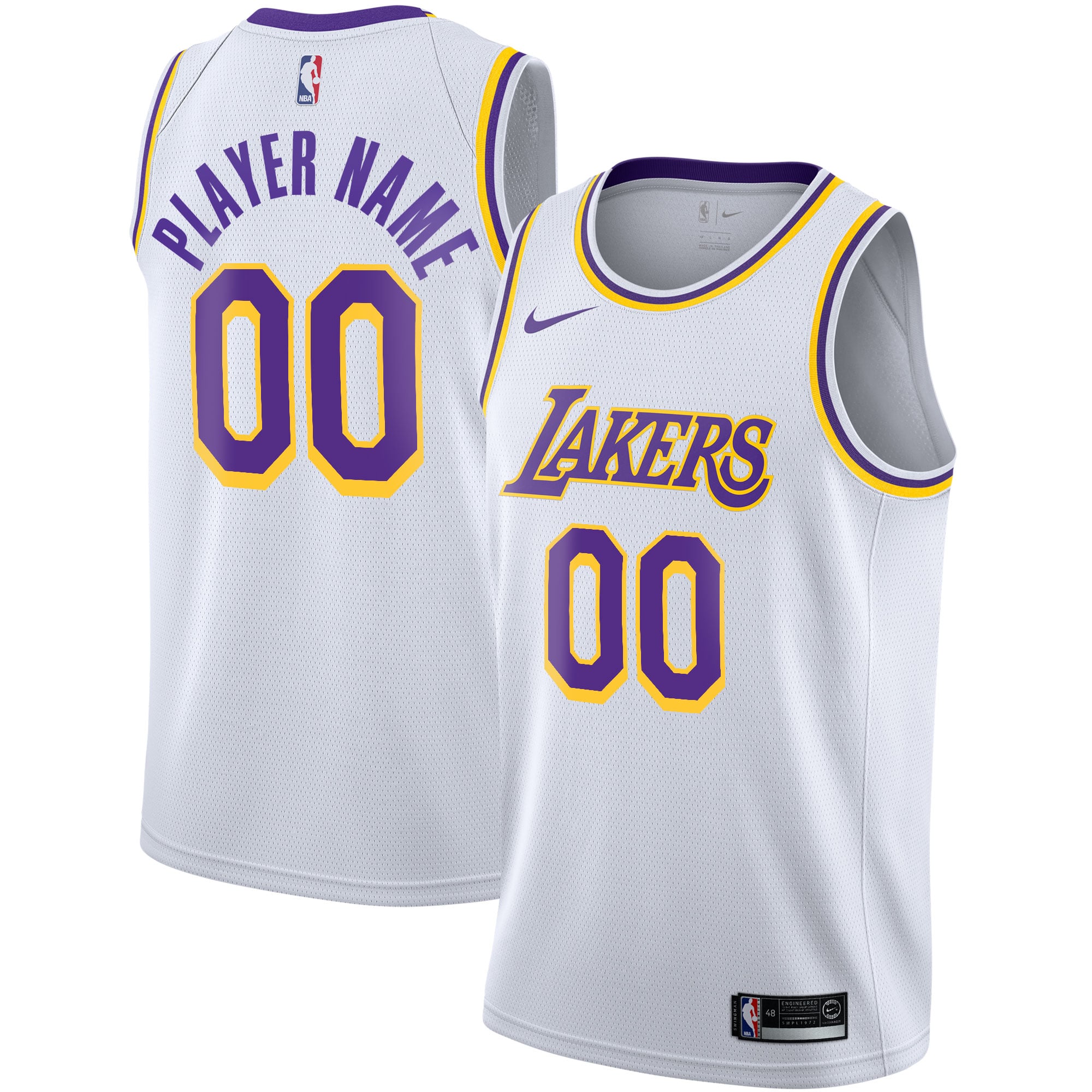 Los Angeles Lakers 2020/21 Custom Jersey - Association Edition - White$54.90
 Dalton Knecht Los Angeles Lakers Fast Break Replica Player Jersey - Association Edition - White$50.90
 Will Richard Golden State Warriors Fast Break Replica Player Jersey - Statement Edition - Black$50.90
 Seth Curry Golden State Warriors Fast Break Replica Player Jersey - Association Edition - White$50.90
 Nikola Vucevic Chicago Bulls Youth Fast Break Replica Jersey - Icon Edition - Red$50.90
 Lonzo Ball Chicago Bulls Youth Fast Break Road Replica Jersey - Icon Edition - Red$49.90
 Jayson Tatum Boston Celtics Fast Break Replica Jersey - Icon Edition - Kelly Green$50.90
 Miles McBride New York Knicks Fast Break Replica Player Jersey - Icon Edition - Blue$49.90
How do I know which size to order?
Measure a jersey you already own and like. Lay it flat, measure pit to pit, and double it — that is your chest number. Compare it with the size chart on the product page rather than with the size printed on your old one, because letter sizes are not consistent across cuts.
Should I get a name and number on the back?
If you are buying one jersey and want it to last a decade, a clean back is the safer call. If you are buying a piece because a specific player got you into the sport, get the name — just go in knowing the jersey is signed to that moment.
Do you carry cuts for women and for kids?
Yes. The women's edit is 31 styles and the full roster runs through the men's collection at 614 styles.
Will the color fade?
Turn it inside out, wash cold, and hang it to dry. Heat is what kills a colorway, and a dryer is the single fastest way to shorten the life of any jersey.
Should I spend more on a first jersey?
Spend on the fit, not the tier. A mid-tier piece in the right size gets worn far more than a top-tier piece in the wrong one — and getting the size right is free.
How long should a jersey last?
Years, if you keep heat away from it. Cold wash, inside out, hang dry. Colorways and detail are both far more sensitive to a dryer than to anything else you will do to them.
Can I wear a jersey to a game if I am nowhere near courtside?
That is what it is for. Wear it the way you would wear any other shirt — one loud piece, everything else quiet — and it reads as a choice rather than as a costume.
What if the team I want is not listed?
All thirty franchises are in the roster. Start at the full NBA collection and work down by conference or division.
Keep shopping


